
With the growing popularity of green and low-carbon concepts, solar lawn lights have gradually become the preferred outdoor lighting solution for courtyards, parks, campuses, scenic spots and other places, thanks to their core advantages of “zero electricity costs, easy installation and no pollution”. They not only meet basic lighting needs but also enhance the visual appeal and nighttime safety of spaces by integrating with the environment. This article will deeply analyze the application value, design ideas and implementation effects of solar lawn lights through practical cases in different scenarios, providing references for users with outdoor lighting needs.
Case 1: Urban Community Park – An “Energy-Saving Model” of Solar Lighting Renovation
1.1 Project Background
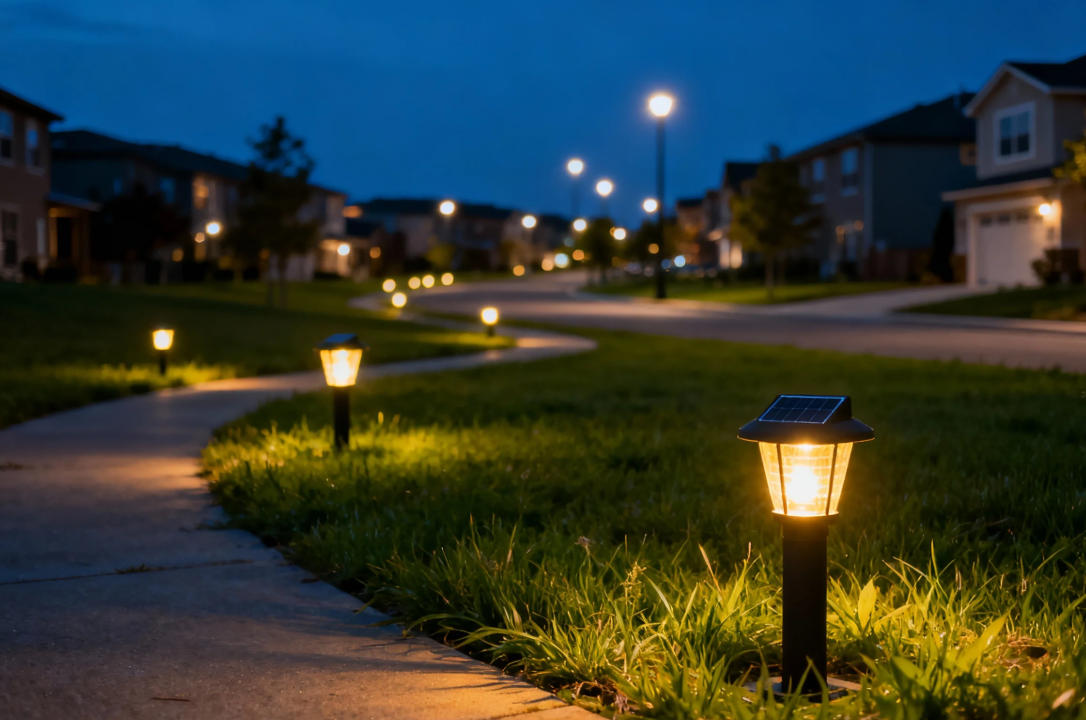
An old community park had a traditional sodium lamp lighting system that had been in use for more than 10 years, with three major problems: first, high energy consumption, with an annual electricity cost of about 160,000 US dollars; second, dim lighting, with some areas having illuminance less than 50 lux, resulting in low sense of safety for residents’ nighttime activities; third, frequent maintenance, requiring replacement of damaged bulbs and lines every 3 months on average, with an annual maintenance cost of about 15,000 US dollars. In response to the city’s “energy-saving renovation” call, the community decided to replace the original lighting system with solar lawn lights.
1.2 Renovation Plan and Technical Parameters
Considering the large flow of people and wide lighting area of the park, the renovation team adopted a “high brightness + long battery life + easy maintenance” solar lawn light product. The specific plan is as follows:
| Lighting Area | Light Type | Technical Parameters | Installation Quantity |
| Main Trail | Solar Double-Arm Garden Light | Solar Panel: Monocrystalline silicon 20W/18V; Battery: Lithium battery 12V/20Ah; Light Source: LED 30W, 4000K natural light; Illuminance: ≥15 lux; Battery Life: 5 consecutive rainy days | 58 pieces |
| Leisure Square | Solar Landscape Lawn Light | Solar Panel: Polysilicon 15W/18V; Battery: Lithium battery 12V/15Ah; Light Source: LED 20W, 3500K warm white light; Protection Level: IP66 | 181 pieces |
| Children’s Playground | Solar Cartoon Lawn Light | Solar Panel: Monocrystalline silicon 10W/18V; Battery: Lithium battery 12V/10Ah; Light Source: LED 15W, RGB color adjustment; With anti-glare design | 162 pieces |
At the same time, the entire system is equipped with an intelligent monitoring platform, which can remotely check the charging status, brightness and fault information of each light. Once a problem occurs, maintenance personnel can promptly come to handle it, greatly reducing maintenance costs.
1.3 Renovation Results and Social Benefits
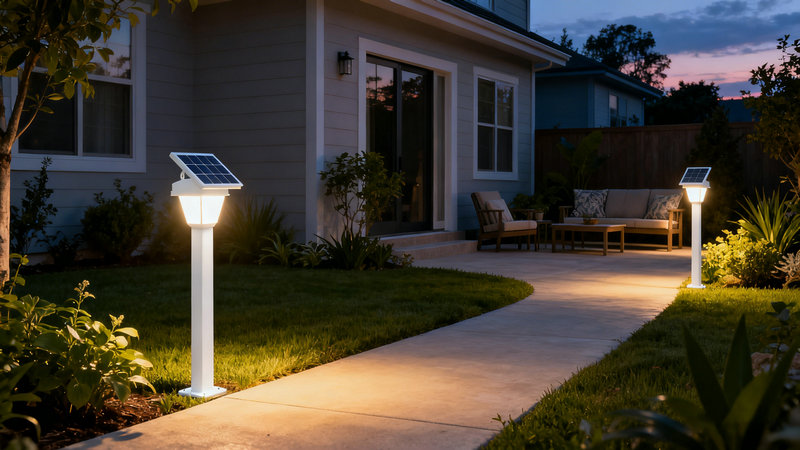
The renovation project was completed in March 2024 and has been operating stably so far, achieving significant energy-saving and social benefits:
- Significant Reduction in Energy Consumption: The annual electricity cost has decreased from 160,000 US dollars to 0, directly saving 160,000 US dollars in financial expenditure annually, and the investment cost is expected to be recovered within 5 years.
- Improved Lighting Effect: The illuminance of the main trail has increased from 30-50 lux to 100 lux. The illuminance of the leisure square and children’s playground is uniform without dark areas, significantly enhancing the sense of safety for residents’ nighttime activities. According to the statistics of the community property management, the nighttime foot traffic in the park has increased by 60% after the renovation.
- Reduced Maintenance Costs: The intelligent monitoring system has reduced the frequency of manual inspections. Up to now, only the batteries of 2 lights have been replaced, and the maintenance cost has decreased by 85% compared with before.
This renovation project was also rated as an “Urban Community Energy-Saving Demonstration Project”, and many surrounding communities have come to inspect and learn from it, providing a replicable model for the lighting upgrade of old public spaces.
Case 2: Rural Cultural Tourism Scenic Spot – Solar Lawn Lights Illuminate the “Night Economy”
2.1 Project Background
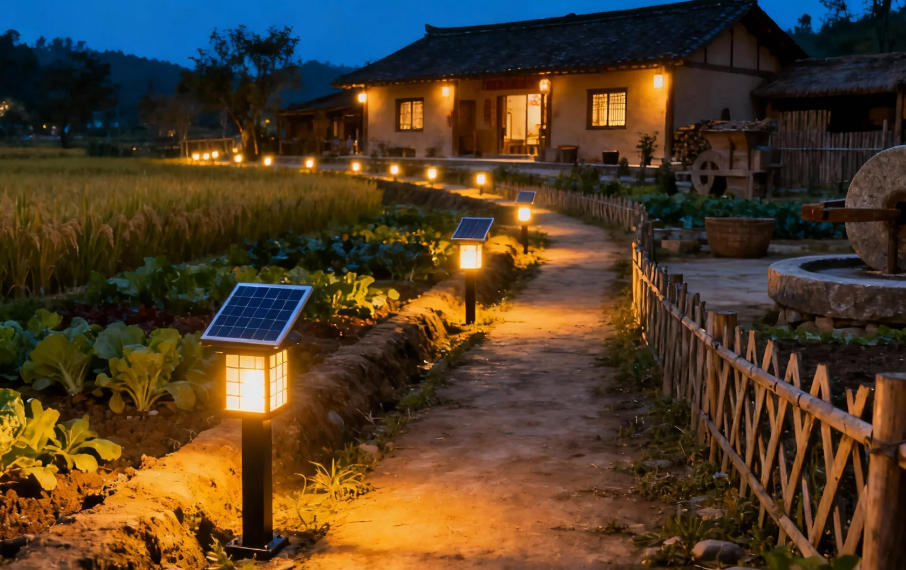
A rural cultural tourism scenic spot takes “rural scenery + folk culture” as its core selling point. It has a large number of tourists during the day, but due to the lack of complete lighting facilities at night, tourists basically leave before evening, making it impossible to develop the “night economy”. The scenic spot hopes to extend the stay time of tourists through lighting renovation, while avoiding large-scale wiring to damage the rural natural landscape, so solar lawn lights have become the best choice.
2.2 Design Ideas and Implementation Plan
The design team took “cultural empowerment + light and shadow interaction” as the core, combining solar lawn lights with the rural landscape and folk elements of the scenic spot:
- Rural Trail Area: 220 solar lawn lights in the shape of bamboo joints are installed, with a height of 80cm. The lamp body is made of environmentally friendly resin material, and the color is integrated with the surrounding bamboo forest. It does not damage the landscape coordination during the day, and emits warm yellow light when lit at night, creating a poetic atmosphere of “bamboo shadows dancing”. The lamp is equipped with a voice-activated sensor module, which emits soft bird calls when tourists pass by, increasing interactive fun.
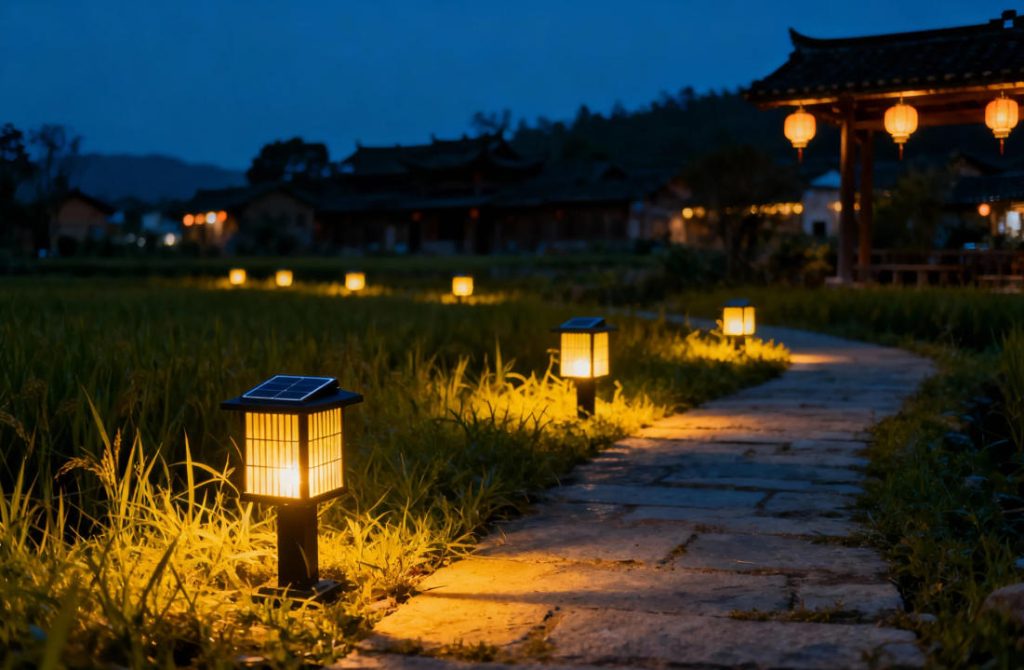
- Folk Square Area: 87 solar lantern lawn lights are arranged. The surface of the lanterns is printed with local folk patterns, such as paper-cuts and New Year paintings. The light source is warm white light, and the patterns are clearly visible when lit, becoming a “living carrier” for nighttime folk culture display. At the same time, 66 solar spotlights are installed around the square, which can project dynamic light and shadow effects such as “rice fields” and “starry sky”, and cooperate with the folk performances in the scenic spot to create an immersive nighttime experience.
- Homestay Cluster Area: 2 solar wall lights are installed at the door of each homestay, and 3-5 solar landscape lights are matched in the courtyard. The light color is uniformly 3000K warm light, creating a warm “home” atmosphere. All lamps adopt waterproof design to adapt to the humid and foggy environment in rural areas.
2.3 Project Results and Economic Benefits
After the completion of the lighting renovation, the nighttime appearance of the scenic spot has taken on a new look: the bamboo joint lights on the rural trails and the lantern lights on the folk square have become popular photo spots for tourists. The “night folk experience tour” project launched by the scenic spot (such as light shows, night picking, folk performances, etc.) is highly praised by tourists. According to the statistics of the scenic spot, after the renovation, the average stay time of tourists has increased from 4 hours to 8 hours, the proportion of nighttime consumption has increased from 0 to 35%, and the monthly turnover during the peak summer season has increased by 2,000,000 US dollars compared with before. “Solar lights not only did not damage the natural beauty of the countryside, but also made the night of the scenic spot more distinctive. Now there are more tourists at night than during the day!” The person in charge of the scenic spot said excitedly.
A Complete Guide to Purchasing and Installing Solar Lawn Lights
3.1 Key Points for Purchase
Different scenarios have different requirements for solar lawn lights. The following 5 points should be focused on when purchasing:
- Lighting Parameters: Choose the appropriate color temperature (2700K-3500K warm light is recommended for courtyards, 4000K-5000K natural light is recommended for public areas), illuminance (≥10 lux for trails, ≥15 lux for squares) and beam angle (narrow beam angle is suitable for key lighting, wide beam angle is suitable for large-area lighting) according to the usage scenario.
- Battery Performance: Lithium batteries are preferred. Compared with lead-acid batteries, they are smaller in size, lighter in weight and longer in service life (generally 3-5 years for lithium batteries, 1-2 years for lead-acid batteries). The battery capacity is selected according to the local sunshine duration. For areas with frequent rainy weather, it is recommended to choose a battery with a capacity of ≥12Ah.
- Solar Panel Efficiency: The conversion efficiency of monocrystalline silicon solar panels (18%-22%) is higher than that of polysilicon (15%-18%), but the price is slightly higher. Polysilicon can be chosen in areas with sufficient sunshine, and monocrystalline silicon is recommended in areas with less sunshine.
- Protection Level: For outdoor use, a protection level of IP65 or above is required. For rainy and humid areas, IP67 or above is recommended to ensure that the lamp is waterproof, dustproof and corrosion-resistant.
- Additional Functions: Choose functions such as light control, human body induction, voice control and APP control according to needs to improve the convenience of use and energy-saving effect.
3.2 Installation and Maintenance Skills
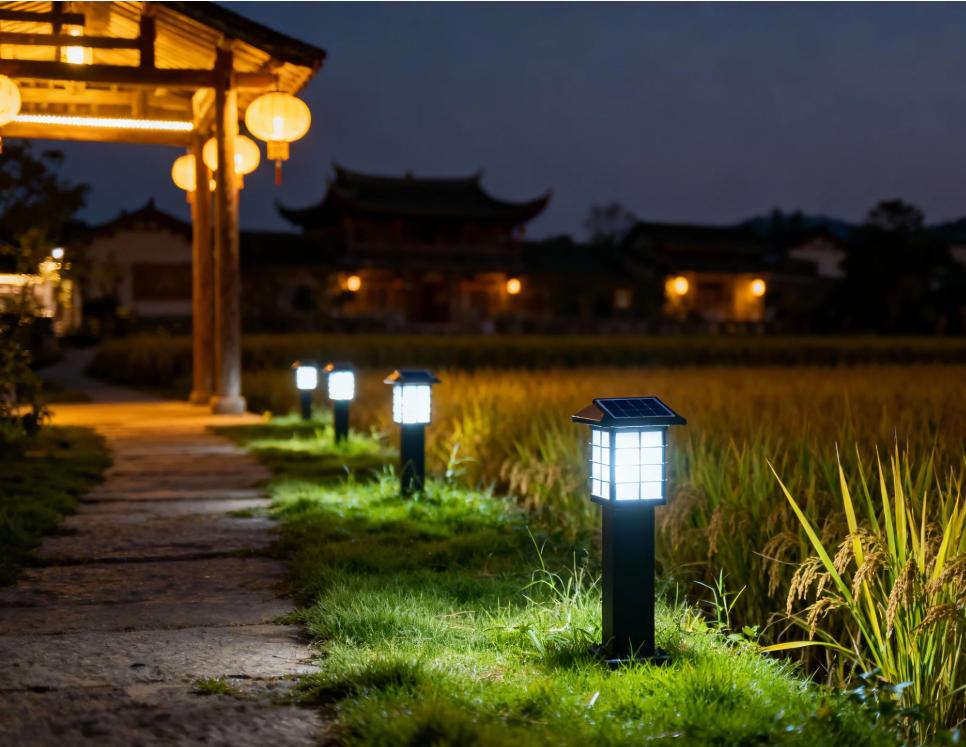
Correct installation and maintenance can extend the service life of solar lawn lights:
- Installation Position: The solar panel should face due south to ensure at least 6 hours of direct sunlight every day, avoiding遮挡 by trees and buildings.
- Installation Height: The height of trail lawn lights is recommended to be 50-80cm, the height of garden lights is recommended to be 1.5-2.5m, and the height of spotlights is adjusted according to the lighting range to ensure the best lighting effect.
- Regular Maintenance: Wipe the surface of the solar panel with a soft cloth every week to remove dust, leaves and other debris to avoid affecting the charging efficiency; check the lamp lines and battery connections every six months, and tighten them in time if they are loose; if the battery life decreases significantly after 3-5 years of use, replace it with the same model in time.
Future Trends: “Intelligence” and “Scenario-Based” Solar Lawn Lights
With the continuous iteration of technology, the development of solar lawn lights presents two major trends: one is intelligent upgrading. In the future, more AI algorithms will be integrated, and sensors will automatically identify environmental light, pedestrian flow and other information, dynamically adjust the lighting brightness and time to achieve “on-demand lighting”; at the same time, the integration of 5G technology will enable the lamp to have remote control, data upload and other functions, facilitating large-scale management. The second is scenario-based design. Lamps will no longer be simple lighting tools, but will be deeply integrated with scene culture and landscape design, such as theme customized lights in cultural tourism scenic spots, interactive induction lights in communities, and decorative art lights in courtyards, to meet users’ multiple needs for “function + aesthetics + experience”.
Conclusion
From villa courtyards to urban parks, from rural scenic spots to community spaces, solar lawn lights are changing the pattern of outdoor lighting with their advantages of energy saving, environmental protection, aesthetics and flexibility. It is not only a lighting product, but also a manifestation of a green lifestyle and a tool for space atmosphere creation. It is hoped that the case sharing and practical strategies provided in this article can help you in choosing and using solar lawn lights, allowing green light energy to illuminate more outdoor spaces and create a living scene that combines energy saving and aesthetics.